
Understanding IELTS Writing Task 2
Many learners struggle with IELTS Writing Task 2, particularly when it comes to crafting a coherent argument. The task requires not just an opinion but a well-structured response that clearly articulates that opinion while addressing the prompt fully.
Common Learner Problem: Lack of Structure
One common mistake I see is the absence of a clear structure in responses. Students often present their thoughts in a disorganised manner, leading to confusion for the examiner. A solid structure is essential for clarity and flow, which are crucial for achieving a higher band score.
Correct Understanding + Real Example
A well-structured essay typically contains an introduction, body paragraphs (usually two or three), and a conclusion. Each paragraph should focus on a single main idea.
For example, consider the prompt: "To what extent do you agree or disagree with the statement that technology has made our lives more complicated?" An effective introduction might read:
The rapid advancement of technology has sparked a debate regarding its overall impact on our lives. While some argue that it simplifies our daily routines, I believe that it has, in fact, added layers of complexity to our existence.
This introduction clearly states the writer's position and sets the stage for the argument.
Concrete Step-by-Step Approach
-
Understand the Prompt: Make sure to read the question carefully. Identify whether it asks for your opinion, a discussion of both sides, or a solution to a problem.
-
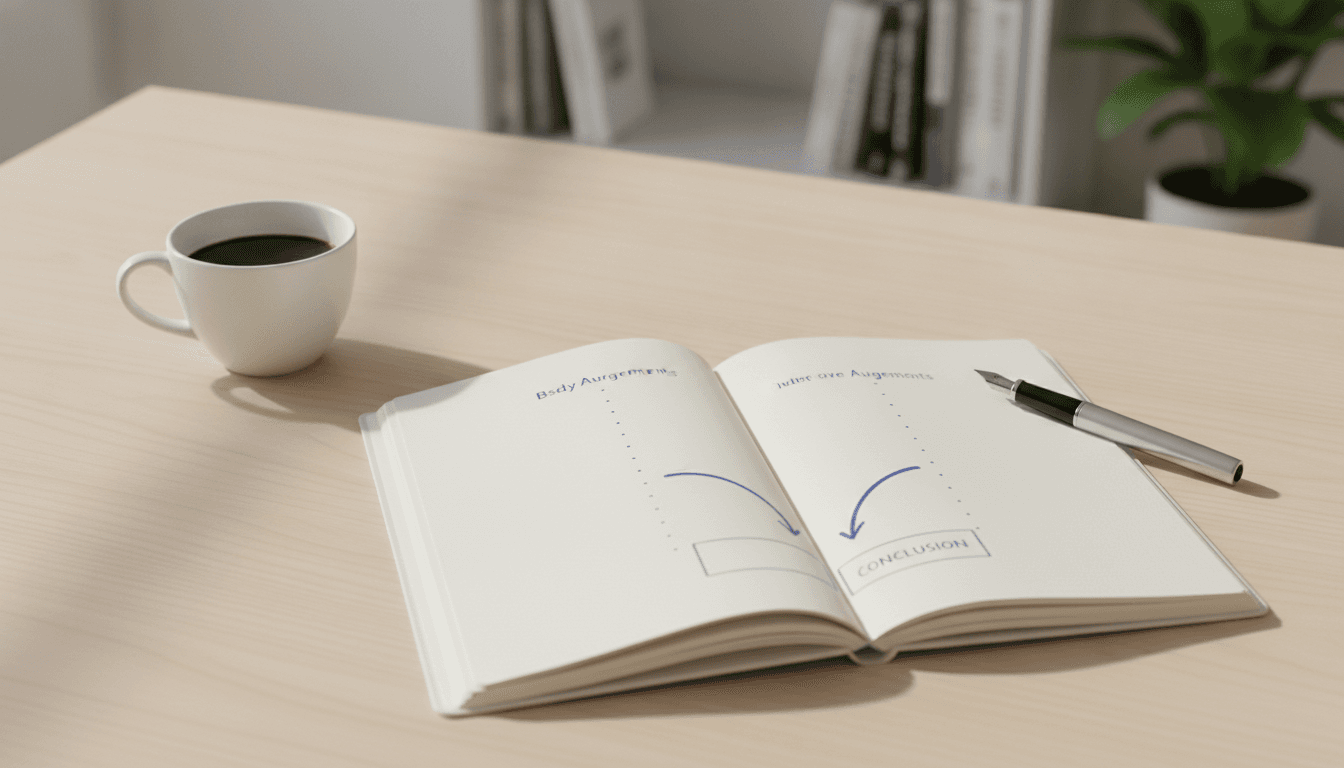
Plan Your Response: Spend 5-10 minutes planning your essay. Outline your introduction, main points, and conclusion. A simple structure might look like this:
- Introduction: State your position.
- Body Paragraph 1: Present your first argument with supporting evidence.
- Body Paragraph 2: Offer a second argument, countering a potential opposing view.
- Conclusion: Summarise your position and restate its significance.
-
Write Clearly and Concisely: Use linking words to guide the reader through your argument. For example:
Additionally, many people find that constant connectivity leads to stress and anxiety, complicating their personal and professional lives.
- Review and Edit: If time permits, read through your essay to correct any grammatical mistakes or awkward phrasing.
Common Pitfalls to Avoid
-
Vagueness: Avoid general statements that lack specific examples or evidence. Instead, aim for detailed arguments. For example, rather than saying, "Technology is bad," specify how it affects relationships or daily tasks.
-
Ignoring the Prompt: Always stick to the task requirements. If the question asks for your opinion, ensure you provide it clearly rather than discussing irrelevant points.
-
Overly Complex Vocabulary: While a varied vocabulary can enhance your writing, ensure that your word choice is appropriate for the context. For instance, saying "utilise" instead of "use" might not necessarily improve your essay if used incorrectly.
Action Checklist
- Read the prompt carefully and identify your stance.
- Create a clear outline before writing.
- Develop each paragraph around a single main idea with supporting details.
- Use appropriate linking phrases to connect your ideas smoothly.
- Proofread your essay for clarity, coherence, and grammatical accuracy.
Conclusion
Crafting a winning argument in IELTS Writing Task 2 requires practice and attention to structure. By avoiding common pitfalls and following a clear approach, you can strengthen your position and improve your chances of scoring higher on the exam. Remember, clarity and coherence are key to making a strong impression on the examiner.
Additional Examples
Here are a few more examples to help you:
-
Model Answer for Introduction:
The debate surrounding the influence of social media on interpersonal relationships is increasingly relevant in today's digital age. While some believe that it fosters connections, I argue that it often leads to superficial interactions.
-
Model Sentence for Body Paragraph:
One significant disadvantage of social media is its role in promoting unrealistic standards of beauty, which can adversely affect self-esteem and mental health.
-
Collocation:
a growing concern over data privacy issues.
By applying these insights and examples, you’ll be well on your way to crafting compelling arguments in your IELTS Writing Task 2 essays.
Frequently asked questions
What is the ideal structure for IELTS Writing Task 2?
An ideal structure includes an introduction, two or three body paragraphs with clear arguments, and a conclusion.
How can I improve my IELTS Writing Task 2 score?
Focus on clarity, coherence, and addressing the prompt directly. Use specific examples to support your arguments.
What common mistakes should I avoid in IELTS Writing Task 2?
Avoid vagueness, ignoring the prompt, and using overly complex vocabulary without understanding its context.
How important is planning before writing my essay?
Planning is crucial as it helps you organise your thoughts and ensures your essay has a clear structure.
Can I use personal examples in my IELTS essay?
Yes, personal examples can strengthen your argument, but ensure they are relevant to the task.
Toey
Verified coachToey is an AI-powered IELTS & TOEIC prep platform. Our guides are written with examiner-informed criteria and tested against thousands of real practice attempts.